Make the Carrier Part of Everyday Life
Build a gradual carrier routine before travel, with voluntary entry and comfortable short practice sessions.
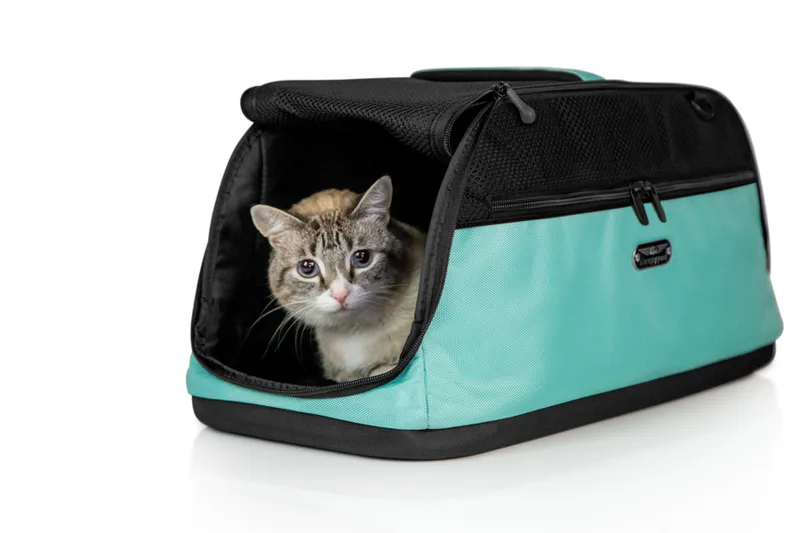
A carrier is easier to accept when it is familiar before departure day. Bringing it out only when the household is rushing gives your cat little opportunity to explore it calmly. Treat carrier preparation as a sequence of small skills: approaching, entering, resting inside, tolerating a closed door and finally being carried. Each step deserves its own quiet practice.
Start with a suitable carrier
Look for secure closures, useful ventilation and a firm supported floor. Your cat should be able to fit comfortably in a natural position. Access through the top as well as the front can make handling easier. Check the actual usable space with any bedding installed; published weight limits alone do not describe body shape. Inspect seams, mesh, latches and fasteners before each journey, especially after the carrier has been stored.
Make voluntary entry worthwhile
Place the carrier in a room where your cat already relaxes. Keep the door secured open and add familiar bedding. Begin with a reward near the entrance, then gradually encourage movement inside. If the carrier has a removable upper section, starting with the open base can help. Let the cat leave freely during early sessions. The goal is relaxed participation, not a rapid trick achieved by shutting the door unexpectedly.
Add one change at a time
Once resting inside is comfortable, practise moving the door briefly, closing it for a short moment and opening it again. Later, try lifting the carrier a little and setting it down smoothly. Keep sessions short enough that the cat remains willing to participate. If a new step causes hesitation, return to an easier version. Do not make a fixed calendar more important than the cat's response.
Plan the actual journey
For car travel, secure the carrier according to its own instructions and keep it closed while the vehicle is moving. For air travel, confirm the current rules with the operating airline for the specific flight and aircraft before booking. A carrier marketed for cabins is not a promise of acceptance everywhere. Prepare any required documents, absorbent lining and practical cleaning supplies in advance, then keep them together so departure is less rushed.
Continue after the trip
When you return, clean the carrier as directed and put it back into its familiar position. Check that zips and fittings still work, and replace soiled bedding with a familiar clean layer. Resume easy open-door sessions instead of storing the carrier until the next appointment. If your cat remains very distressed or has previously struggled during transport, ask your veterinary team to help plan future journeys. A comfortable routine is built through repeated manageable experiences, not by forcing one long rehearsal.
The conversation0
No replies yet. A thoughtful first reply can start something good.