Build an Indoor Play Routine Your Cat Enjoys
Use movement, variety and achievable games to make everyday play more interesting.
Useful play begins with attention to the cat in front of you. One cat stalks quietly before pouncing; another enjoys batting a toy across the floor. Watching is part of the game, so a pause does not always mean boredom. Build a small selection of activities and learn which movements, textures and times invite your cat to join in.
Move the toy like a target
A wand gives you distance from teeth and claws while letting you vary movement. Slide or flutter the toy away from your cat, pause it near a hiding place and allow time for stalking. Include chances to catch it. Avoid repeatedly sweeping the toy into the cat's face. Hands and feet should not become the target, particularly when teaching a kitten how to play with people.
Use the room
A plain box or tunnel can create a new route for an existing toy. Keep exits clear and check that cardboard has no staples or loose tape. Choose stable climbing furniture with accessible levels. A familiar blanket on a resting platform can make it more inviting. Let your cat investigate at their own pace instead of placing them on a high surface and expecting immediate enthusiasm.
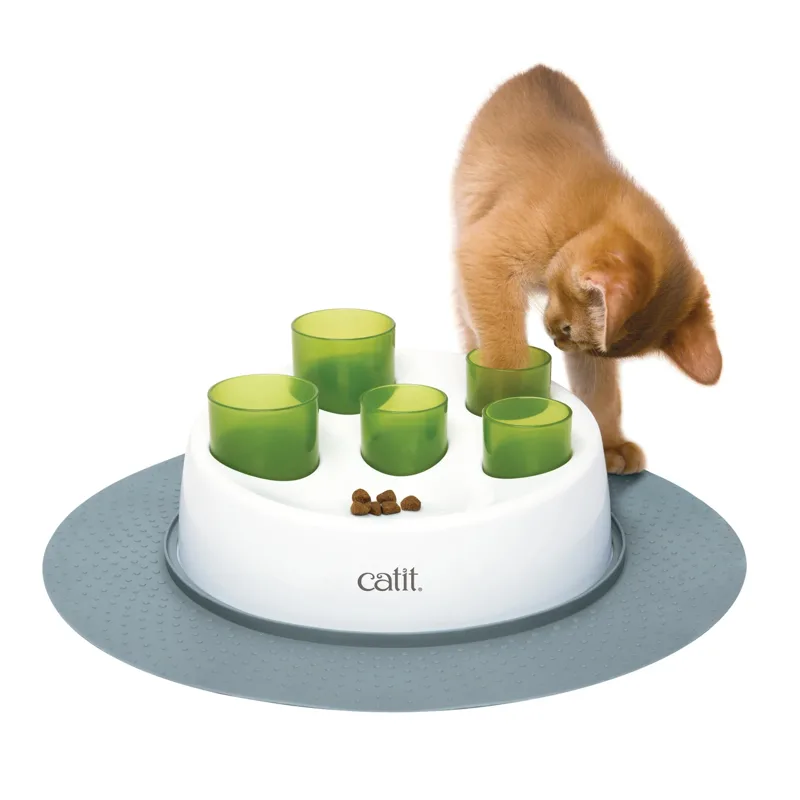
Introduce a simple food puzzle
Begin with an easy challenge and only a small portion of food. Place some pieces where they are immediately accessible, then let the cat discover a slightly harder position. A puzzle should create an achievable activity, not prevent a reluctant cat from eating. Observe early use, keep the normal meal plan in mind and account for any treats you add. Change the difficulty only when the current version is comfortably understood.
Rotate rather than overwhelm
Keep a few safe toys available and rotate others to create variety. Put away string, feather wands and any item that can be chewed into loose pieces after supervised play. Inspect toys for detached parts before the next session. In a home with several cats, offer individual opportunities if one cat repeatedly takes over. A quiet cat may enjoy the same toy when there is less competition around it.
Make a routine you can repeat
Try a few brief sessions at times your cat is naturally alert. Write down which game earned interest and which was ignored; this helps you choose the next activity without buying more toys. Slow the movement toward the end and provide a final catch. Keep the intensity appropriate to the cat's age and comfort. If play suddenly changes or movement looks difficult, seek veterinary advice. The long-term aim is a flexible daily habit that the cat can choose to engage with, including days when a gentle floor game is enough.
The conversation0
No replies yet. A thoughtful first reply can start something good.