Build a Better Litter Box Station
Plan a quiet, accessible litter area with enough space to turn, dig and leave comfortably.
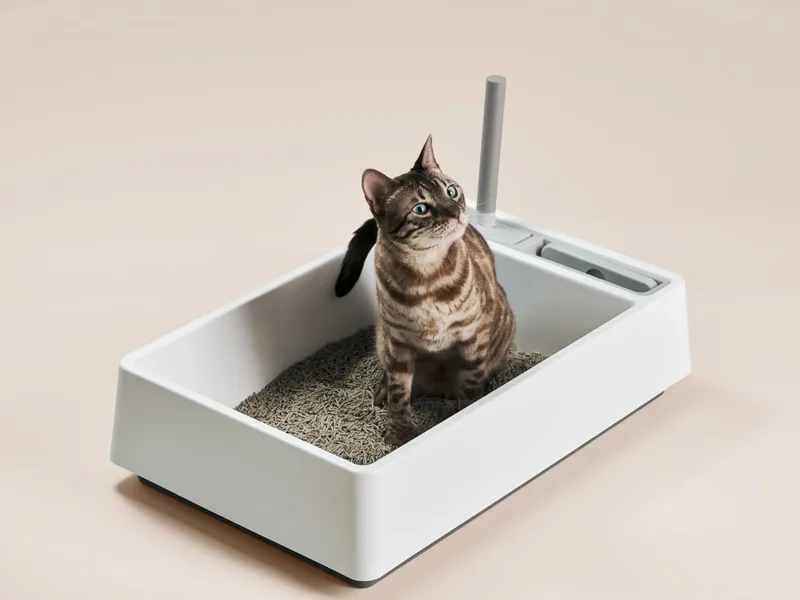
A successful litter station begins with the cat's route through the room. Before choosing a decorative cabinet or a compact tray, watch where your cat feels comfortable and whether another pet can block the approach. The aim is an accessible everyday resource with enough space around it for a calm arrival and an easy exit.
Choose space before style
Choose a tray that allows your cat to turn and dig without squeezing against the sides. Check the usable interior dimensions, rather than judging the outer package. Storage compartments and thick walls can make a large-looking product surprisingly small inside. A low entry may suit a kitten or a cat that finds high steps difficult. High surrounding walls can help contain scattered litter, but the doorway still needs to be manageable.
Give each station a useful location
A common starting point is one tray for each cat, plus an additional tray. Spread them through accessible areas instead of grouping every tray into a single corner. Keep toileting areas separate from food and water. Avoid a noisy appliance, a busy passage or a room whose door regularly closes. In a home with multiple levels, think about the journey to a tray as carefully as the number of trays.
Keep the routine simple
Scoop waste frequently and inspect the tray at least morning and evening. How often the entire contents need replacing depends on the litter type, the number of users and the condition of the remaining litter. When a full wash is needed, empty the tray, use mild detergent and water, rinse thoroughly and dry before refilling. Clean the scoop and surrounding floor too. Strong fragrance is not a substitute for removing waste.
Introduce changes one at a time
A new box, a new position and a different litter are three separate changes. If you make them together, it becomes difficult to learn which one your cat dislikes. Keep an established station available while offering the new option. Note which station is used and whether entry, digging or turning appears awkward. Do not interpret a single visit as proof that the whole arrangement is working.
A practical weekly check
Look for rough edges, loose accessories, lingering residue and mats that have become hard to clean. Check that cleaning tools are easy for you to reach but safely stored away from curious paws. Photograph the layout for your own comparison before moving anything. Small adjustments to access and cleaning are often more useful than replacing every item. If toileting habits suddenly change, arrange veterinary advice rather than assuming the furniture is the only cause.
The conversation0
No replies yet. A thoughtful first reply can start something good.